The post Case Study – From Requirements to Product appeared first on Unitive Design.
]]>Challenge : There’s a Design Brief – and then there’s an Impossible Design Brief. Or so it seems. We were asked to take on a highly constrained set of requirements to produce a specific illumination solution. We’re not even going to mention the suck-your-breath-in time and budget constraints. The specification demanded a geometry which was already defined, a limited space requiring a design around a cylindrical symmetry of existing arc lamps and extremely specific colour requirements, not to mention the need for stability, no moving parts (other than forced air cooling) and the whole thing to be field-replaceable.
Approach : After using some of the limited time to scratch our heads, we set to work by looking at the various components – mechanical, optical, electrical, thermal, communications, and interfaces. We then began a process of rapid iterative designs, interspersed with a bit more head scratching, which quickly delivered a winning prototype.
The end result : We knew we had to apply a creative approach to product design in this case since the Market Requirement Specification gave parameter magnitudes that were extremely large. We adopted a Risk Management design approach which highlighted key risks and steered our course. We innovated with quick and inexpensive experiments revealing invaluable information and preventing any waste-of-time designs. The final design met the physical mechanical requirements, was compatible, provided the correct optical flux and spectrum with the correct temporal behaviour and was ready for manufacture. A key strength was its relative simplicity, requiring only readily-available off-the-shelf components.
The post Case Study – From Requirements to Product appeared first on Unitive Design.
]]>The post Case Study: Medical Product In Repeated Failure Mode appeared first on Unitive Design.
]]>Challenge : It’s one of the worst situations. You’ve got beyond design, build and prototype. You’ve told The Board the product’s ready. Now it’s in clinical trial but everything is going wrong.
It’s a situation we’re not unfamiliar with, one we’ve seen many times. In this case we were invited in to bring perspective and get things moving. It often happens that the developers, who know the code backwards, end up not seeing the wood for the trees. They’ve seen the code too many times, debugged it a thousand, and now, frankly, they can’t really see it any more. Plus the pressure is building. In this particular case, the clinical trial was a key element of the Usability and Validation for the product’s clinical diagnostic functionality. The company wanted to get the product to market but the trial was repeatedly uncovering instabilities in the software. The confidence of the clinicians was noticeably dropping. Not a nice place to be.
Approach : When we analysed the situation, it soon became apparent that each new bug fix was introducing new ‘unwanted’ features into the product. The root cause was ambiguity in the specifications so some members of the development team had different interpretations. At this level even small differences in understanding can create major problems. We worked with the team to address key points including a lack of unit testing in certain critical software functions, lack of regression testing, loose technical specifications, and test protocols. Oh, and not enough attention to the ISO 13485 and IEC 62304 regulatory standards.
The end result : The company re-organised the development team based on UDAs contribution of a tightened up design, new specifications, and test protocols. A significant step improvement was immediately seen in software stability and reliability. A rapid increase in clinical confidence based on improved performance lead to the company being able to push ahead with the manufacturing plan.
The post Case Study: Medical Product In Repeated Failure Mode appeared first on Unitive Design.
]]>The post MITOS – New Technologies for NDT/NDE appeared first on Unitive Design.
]]>New materials and composites require new practical methods for inspection and quality processes.
Current off-the-shelf technology cannot accurately detect failures in many applications from inspection of graphite moderator stacks to cracks in wind turbine blades. With increasing global trends toward automation, robotics, remote management of operations and increased demand for digitalisation, we were highly motivated to join the European MITOS (Magnetic Induction Tomography with Optical Sensors) project to explore the possibilities of implementing quantum sensor technology in inspection systems*.
Quantum technology
The scientific foundation for the project was based on the research performed by the team at UCL on radio-frequency atomic magnetometers, which demonstrated that quantum sensors could provide orders of magnitude greater performance than current systems.
MITOS project
The MITOS project extended the concept to investigate the commercial development prospects for a robotic inspection system for imaging applications such as inspection under cladding, paint, debris and laminate materials.
Outcomes
The project confirmed that a system based on the use of atomic magnetometers to deliver a form of electromagnetic induction imaging would be capable of overcoming many of the limitations in current systems**.
Benefits
We demonstrated that this technology would be capable of development into a new inspection system which would offer a series of key advantages. The technology does not require contact with the object being inspected. It can be miniaturised. It can be readily deployed in automated/robotic systems. It can be deployed in underwater scenarios.
An inspection system based on radio-frequency atomic magnetometer technology would be an appropriate solution for many applications which require imaging through materials, for example in the evaluation of steel structures through layers of marine life.
* Project consortium: Unitive Design, the Department of Physics and Astronomy at UCL, the Istituto Nazionale di Ottica, Marwan Technology and Valis Engineering
** A demonstration of the radio-frequency atomic magnetometer with sub-Doppler laser cooled rubidium-87 in a simple and compact design, was demonstrated at UCL and shown to work to a sensitivity of 330 pT/√Hz in an unshielded environment, matching or surpassing previously reported cold atom designs.
The post MITOS – New Technologies for NDT/NDE appeared first on Unitive Design.
]]>The post PoC-BoSens – Point of Care Bio-sensing appeared first on Unitive Design.
]]>Overview

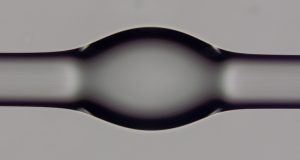
The PoC-BoSens project was a European consortium consisting of a multidisciplinary, collaborative team of biochemists, packaging and assembly experts, photonic and micro-fluidic chips designers, along with optical readout specialists, focused on early stage point of care diagnostics. It was set up to explore the feasibility of using bottle mode resonators which exhibit whispering-gallery-like optical modes for bio-sensing and specifically targeted at disease-relevant biomolecules. Such molecules are key in the early diagnosis of pathologies in scenarios where there is a risk of the rapid onset of disease or where disease can become chronic in the time take to perform conventional diagnostic techniques. Antibiotic-resistant tuburculosis is one such disease target example.
Unitive Design were tasked with capturing all of the device requirements and top-level specifications, maintaining a system-level coherent control and capturing technical and sub-system interface risks to ensure that the device could perform to specification as a complete, complex system.
Project goals
The project had four primary goals:
- Prove that ELISA biochemical assays can be translated to the point of care device
- Produce an ultra-sensitive readout system using the high Q-factor of BMRs
- Develop a portable readout system which conforms to the healthcare economics
- Develop a robust, affordable assay cartridge prototype
An ambitious project with a high degree of knowledge-transfer between the team members, three (overlapping) working groups: Bio-recognition, Chip Integration, Readout and an over-riding integration module to bring the subsystems into a cohesive whole.
Project Team
The project team comprised:
- Fraunhofer Centre for Microelectronics and Packaging (IZM – Berlin, DE) – lead partner
- BBI Solutions (Freiburg, DE)
- Scienion (Berlin, DE)
- MDX devices (Deißlingen, DE)
- IfU Diagnostic Systems (Chemnitz, DE)
- Austrian Institute of Technology (AIT – Vienna, A)
- Scuola Superiore Sant’Anna (SSSA – Pisa, I)
- SYEL Industrial Automation & Electronics Systems (Pisa, I)
- Unitive Design & Analysis Ltd (London, GB)
The post PoC-BoSens – Point of Care Bio-sensing appeared first on Unitive Design.
]]>