

PoC-BoSens – Point of Care Bio-sensing
Label-free PoC device based on 3D photonic Bottle microresonators for real-time high- Sensitive measurement of disease relevant biomolecules
Overview

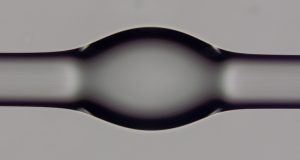
The PoC-BoSens project was a European consortium consisting of a multidisciplinary, collaborative team of biochemists, packaging and assembly experts, photonic and micro-fluidic chips designers, along with optical readout specialists, focused on early stage point of care diagnostics. It was set up to explore the feasibility of using bottle mode resonators which exhibit whispering-gallery-like optical modes for bio-sensing and specifically targeted at disease-relevant biomolecules. Such molecules are key in the early diagnosis of pathologies in scenarios where there is a risk of the rapid onset of disease or where disease can become chronic in the time take to perform conventional diagnostic techniques. Antibiotic-resistant tuburculosis is one such disease target example.
Unitive Design were tasked with capturing all of the device requirements and top-level specifications, maintaining a system-level coherent control and capturing technical and sub-system interface risks to ensure that the device could perform to specification as a complete, complex system.
Project goals
The project had four primary goals:
- Prove that ELISA biochemical assays can be translated to the point of care device
- Produce an ultra-sensitive readout system using the high Q-factor of BMRs
- Develop a portable readout system which conforms to the healthcare economics
- Develop a robust, affordable assay cartridge prototype
An ambitious project with a high degree of knowledge-transfer between the team members, three (overlapping) working groups: Bio-recognition, Chip Integration, Readout and an over-riding integration module to bring the subsystems into a cohesive whole.
Project Team
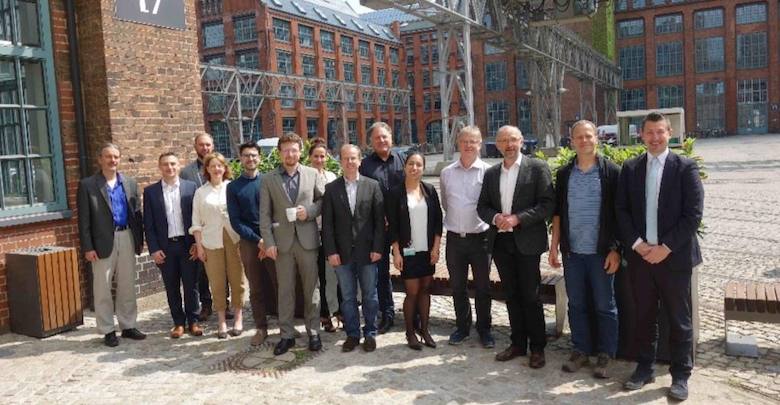
The project team comprised:
- Fraunhofer Centre for Microelectronics and Packaging (IZM – Berlin, DE) – lead partner
- BBI Solutions (Freiburg, DE)
- Scienion (Berlin, DE)
- MDX devices (Deißlingen, DE)
- IfU Diagnostic Systems (Chemnitz, DE)
- Austrian Institute of Technology (AIT – Vienna, A)
- Scuola Superiore Sant’Anna (SSSA – Pisa, I)
- SYEL Industrial Automation & Electronics Systems (Pisa, I)
- Unitive Design & Analysis Ltd (London, GB)